If your real goal is lead generation, the “best” landing page builder for lead generation is not the one with the prettiest templates — it’s the one that reliably captures form fills, routes calls, and helps you improve conversion rates over time.
In practice, that means choosing a landing page builder that makes it easy to create focused pages, connect forms to your CRM or email platform, and measure what actually turns traffic into leads.
The tricky part is that most businesses don’t need a giant marketing stack to get this right.
A simple setup — landing page builder, follow-up automation, and basic analytics — is often enough to generate consistent leads without adding unnecessary complexity.
Note: If you’re trying to drive serious traffic and you care about stability during spikes, pairing a conversion-focused page builder with reliable infrastructure matters too; that is where a managed platform like Kinsta's Managed Platform can support the back end while your landing page tool focuses on the front-end conversion work.
Or, develop landing pages with a system you create within a completely managed solution like Webflow
What “best” really means for lead generation
A landing page builder is only useful for lead generation if it helps you do three things consistently: capture the lead, route and follow up, and improve over time.
That sounds simple, but many tools are weak in at least one of these areas.
Here’s the practical lens:
- Allow you to build one or many landing pages, at scale: Multiple offers, multiple products and services. So, you won't just be running with one landing page. The landing page builder or the landing page system you create should be capable of letting you create as many landing pages as possible. Fast, and without the need for dependence.
- Capture the lead fast: mobile-first pages, clear CTA, short forms, and a single action.
- Route the lead automatically: direct integrations with email marketing, CRM, scheduling, SMS, or webhooks.
- Improve conversion rates: A/B testing, analytics, and enough flexibility to test headlines, CTA placement, forms, and layout.
If a builder cannot do those three things well, it may still be fine for simple pages, but it is not the best choice for real lead generation.
The Best Landing Page features that matter most
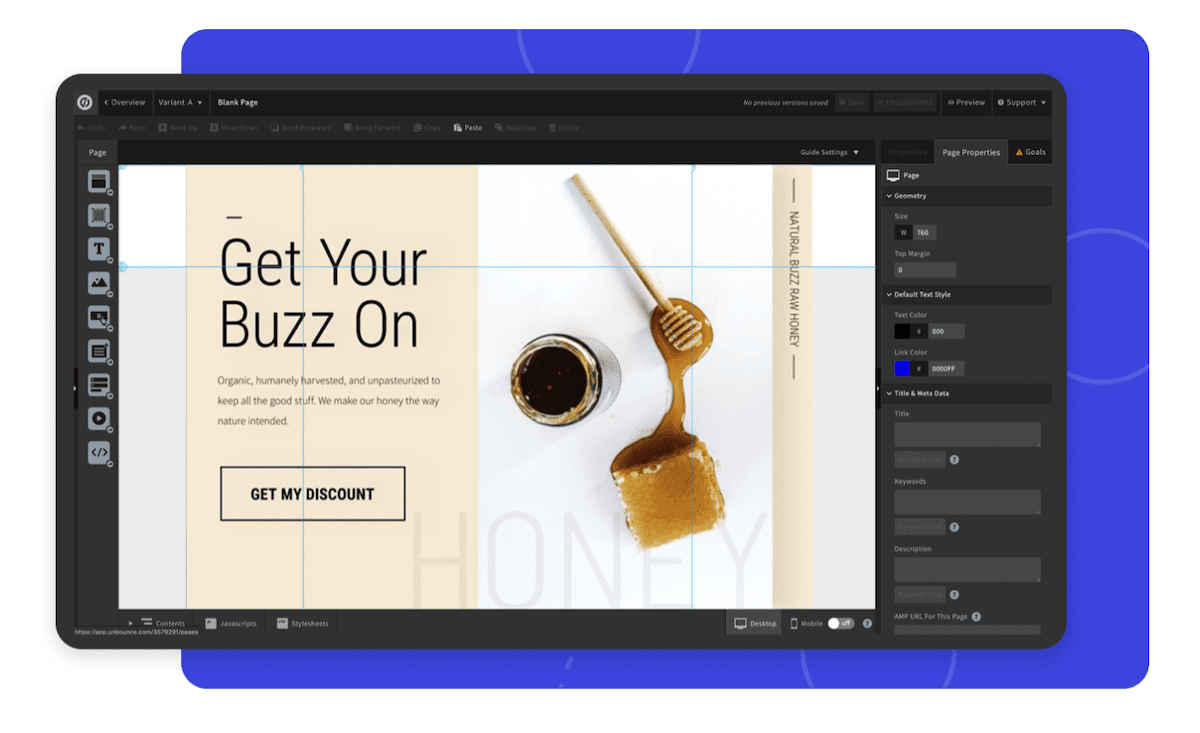
When business owners compare builders, they often get distracted by the editor experience alone. Drag-and-drop convenience matters, but the most important feature is how the builder handles forms and integrations.[2]
The non-negotiables are:
- Conversion-focused templates so you are not starting from scratch.
- Custom forms that can collect the right lead details without friction.
- Integrations with your email platform, CRM, calendar, and ad tools
- A/B testing to compare headlines, images, CTA copy, and layouts.
- Fast load speed because slow pages hurt conversion rates.
- Mobile optimization because most landing page traffic is mobile.
One source also emphasizes that page speed and conversion performance should be treated as first-class evaluation criteria, not afterthoughts.
That matters because a landing page that looks good but loads slowly will quietly waste ad spend and reduce lead volume.
For form fills, the builder must remove friction
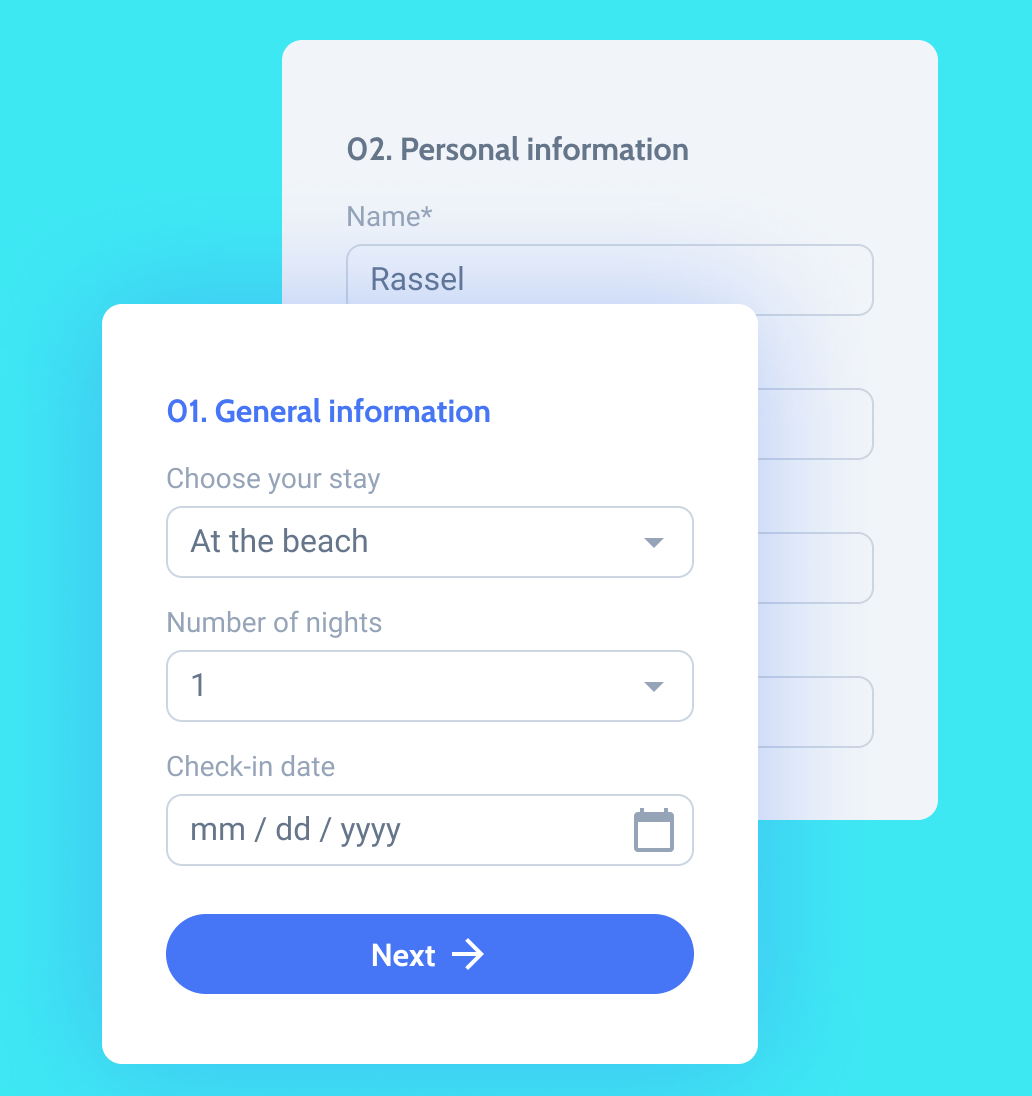
If you want more form fills, your page should make the next step obvious and easy. That means one page, one goal, and one clear call to action.
The best tools make it simple to:
- Use a short form above the fold
- Add custom fields only when necessary
- Match the form to the offer
- Send the submission immediately to your follow-up system
This is where many teams lose leads. If the form data lands in a spreadsheet, email inbox, or manual process, follow-up slows down and response rates suffer. A builder that connects directly to your CRM or email software reduces manual work and helps sales or marketing respond faster.
A simple rule: if your lead magnet is easy to understand, your form should be easy to complete. If your form feels like an application, your conversion rate will usually drop.
For calls, your page needs a second conversion path
Not every lead wants to fill out a form. For service businesses, high-intent visitors often want to call right away or book a time on the calendar.
The best landing page builders for lead generation support that behavior by allowing:
- Click-to-call buttons
- Embedded booking widgets
- Appointment forms
- Call tracking integrations
- Clear phone-first CTA placement
This is especially useful for agencies, consultants, contractors, legal services, local service businesses, and any team where a live conversation is the real conversion event. If your builder only supports email capture, you may miss the highest-intent leads.
A practical approach is to decide which conversion matters most:
- Form fill for nurture and qualification
- Call for high-intent, high-touch offers
- Booking for services that close best in a conversation
The best builder is the one that supports the conversion path your business actually uses.
Speed and hosting are part of the conversion stack
Landing page software is often evaluated as if it lives in a vacuum, but speed and reliability directly affect lead generation. The research here is consistent: faster pages convert better, and even small delays can hurt results
That is why stability matters when your campaign starts working. If a page slows down or fails during an ad spike, you are paying for clicks that never convert.
Note: If you are not using landing page builders like Unbounce, Leadpages, and Instapage and if you are using WordPress, then a reliable foundation like Kinsta's Isolated Cloud Infrastructure can help protect the broader site environment so your landing page campaign is not fighting infrastructure problems at the same time it is trying to win conversions.
Or, go for a completely managed landing page system you can create with Webflow.
This is not about overengineering. It is about making sure your marketing page can handle real demand without degrading when traffic rises.
The best tool depends on your use case
There is no single winner for every company. The best choice depends on how you generate leads.
Choose a dedicated landing page builder if:
- Landing page performance is critical
- You need built-in A/B testing
- You run paid traffic
- You care about conversion optimization over design flexibility
Choose a broader marketing platform if:
- You need landing pages plus follow-up automation in one ecosystem
- You want built-in booking, chat, and funnel tools
- You prefer fewer integrations and a more all-in-one workflow
Choose a simpler tool if:
- You only need a basic opt-in page
- You have low traffic
- You want something quick and inexpensive
- Your lead capture is tied mostly to one email tool
That simplicity can be enough for solopreneurs and small teams. But once lead volume matters, a more serious builder usually pays for itself through better conversion rates and better routing.
What a strong lead-gen stack looks like
Leadpages’ guidance is refreshingly practical: you do not need a dozen tools. For many businesses, a useful stack is:
- Landing page builder
- Email follow-up, and optionally SMS
- CRM when lead management becomes more important
- Scheduling tool if calls or consultations are part of the process
- Analytics with conversion events and UTM tracking
That model works because it keeps the workflow clean. The landing page has one job: turn traffic into a lead or call. The follow-up tools handle nurturing. The analytics tell you what is working.
If you are using ads, this separation is even more important. A landing page builder that integrates cleanly with your analytics and campaign tracking will make optimization much easier.
What to look for before you buy
Before you choose a builder, ask these questions:
- Can I create pages without developer help?
- Does it have conversion-focused templates?
- Can I build forms that fit my offer?
- Will it connect to my email platform and CRM?
- Does it support calls, booking, or calendar embeds if needed?
- Can I test different headlines or CTA buttons?
- Is the page fast on mobile?
If the answer is “yes” to most of those, you are likely looking at a serious lead generation tool.
A realistic recommendation for business owners
For most businesses, the best landing page builder for lead generation is the one that balances conversion features, integrations, and speed without making the workflow complicated.
If your priority is fast form fills and reliable follow-up, choose a dedicated builder with strong templates, form control, and testing. If your priority includes booked calls and an integrated funnel, choose a platform that supports that end-to-end workflow.
If you are running paid traffic or need higher reliability, make sure the page builder is only part of the equation. Pair it with stable hosting and a clean analytics setup so you can actually trust the data and avoid losing leads when traffic increases. That combination is what turns a landing page from a design asset into a lead engine.
The bottom line for lead generation
The best landing page builder is not defined by how many features it has. It is defined by whether it helps you capture leads quickly, route them correctly, and improve conversion over time.
For form fills, prioritize short forms, clear templates, and seamless integrations. For calls, prioritize click-to-call, booking, and appointment flows. For real conversions, prioritize speed, testing, and a clean technical foundation.